

Tracking the Shift in Payment Preferences
Over the past 20 years, the U.S. payments market has undergone one of the biggest transformations in its history.
To understand this scenario, it is necessary to look at three main pillars of this transition: consumer preference, technological innovation, and the regulatory and competitive environment.
From the plastic era to the digital dominance
For decades, cards dominated the U.S. payments market. In 2010, more than 60% of all purchases were already made with credit or debit cards.
However, this changed with smartphones. The launch of Apple Pay in 2014—followed by Google Pay and Samsung Wallet—marked the first major turning point.
Contactless payments (NFC), once viewed with suspicion, came to represent speed, convenience, and security.
By 2025, it is estimated that more than 60% of American consumers will use some form of digital wallet in their daily lives, many of them as their primary payment method.
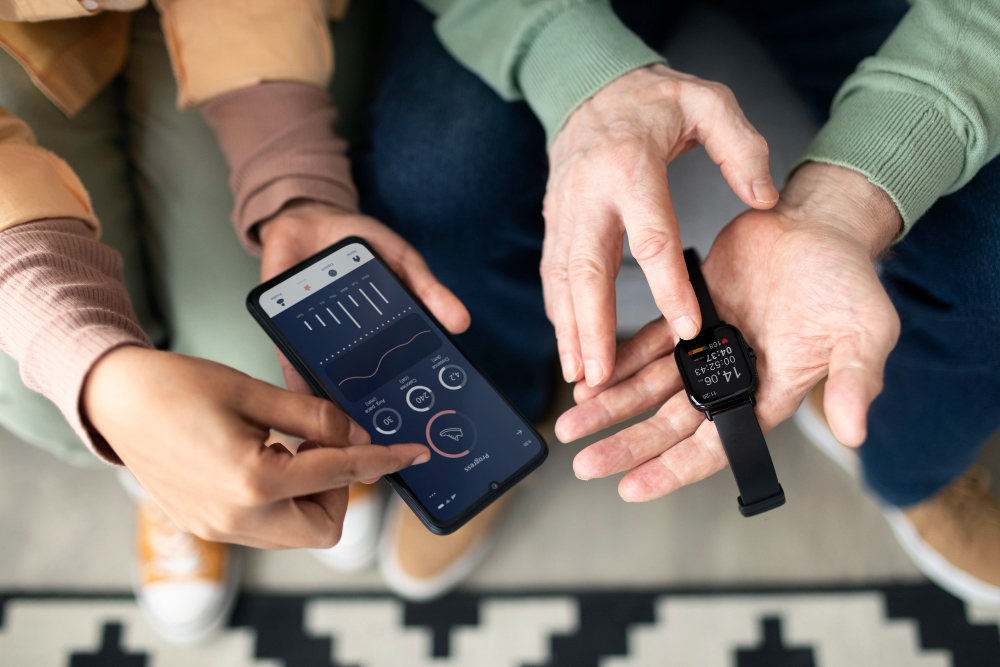
This adoption gained strength with the growth of wearables: smartwatches and wristbands that have turned payments into an almost invisible gesture.
If cards once seemed convenient, devices on the wrist became even more intuitive—and hygienic.
The silent revolution: invisible payments
Invisible payments are those that happen automatically, without direct user interaction.
The classic example is Uber, in which the payment is completed the moment the passenger gets out of the car. This model has spread to:
- Gas stations with sensors and license plate recognition
- Supermarkets with automated checkout
- Delivery apps and subscription services
- Mobility fintechs and microtransactions
The behavioral impact is profound: when friction disappears, the propensity to spend increases.
Consumers spend more because payment is no longer a moment of financial reflection.
Meanwhile, companies benefit from highly detailed behavioral data. Each transaction generates insights that feed new models of credit, pricing, and personalization.
BNPL: the new checkout credit
Another phenomenon changing habits in the U.S. is Buy Now, Pay Later (BNPL)—pay later, without a traditional credit card.
Platforms like Affirm, Afterpay, and Klarna gained traction, especially among young adults who avoid revolving debt.
This model is based on three behavioral pillars:
- Transparency—a defined number of installments
- Zero interest (when paid on time)
- Integration with e-commerce—credit as a natural part of checkout
This signals a significant shift in the relationship with credit: long-term debt is losing space to short, targeted financing embedded in the shopping experience.
But rapid growth has raised regulatory concerns: missed payments and over-indebtedness among young consumers have increased in recent years.
From risk to algorithm: AI in payment decisions
As consumer behavior changes, the financial industry must adapt. To do so, U.S. banks and fintechs are increasingly relying on AI models to assess risk in real time and enhance fraud detection.
There is also a push to offer personalized credit limits and conditions while reducing operational costs related to disputes and chargebacks.
The result is that limits and approvals are no longer static—they respond dynamically to user behavior.
This evolution also democratizes access: consumers with limited credit history (such as immigrants or recent graduates) find new opportunities opening.
Security as a core trust factor
For American consumers, security isn’t a detail—it’s a decisive factor. And the industry has responded with multiple layers of protection, such as biometrics, tokenization, machine-learning-based fraud detection, and adaptive authentication.
The perception of security has been crucial in accelerating the migration from physical to digital. What once generated distrust—“Is my phone safe to pay?”—has become the new standard of protection.
New players, new power of choice
In the past, the U.S. payments system was dominated by four major networks. Today, the landscape is far more diverse:
- Fintechs specializing in digital wallets
- Tech giants entering financial services (Apple, Google, Amazon)
- Private payment networks inside e-commerce apps
- Peer-to-peer solutions like Venmo, Cash App, and Zelle
These services have become part of everyday culture: sending money to a friend via smartphone is now second nature, replacing the old habit of splitting the bill with cash or cards.
The future: smart and integrated payments
The path ahead points toward a system that is even more invisible, automated, and connected—enabled by predictive AI, unified financial identity, voice-activated payments, and full integration between physical and digital shopping.